Stop and learn about roses
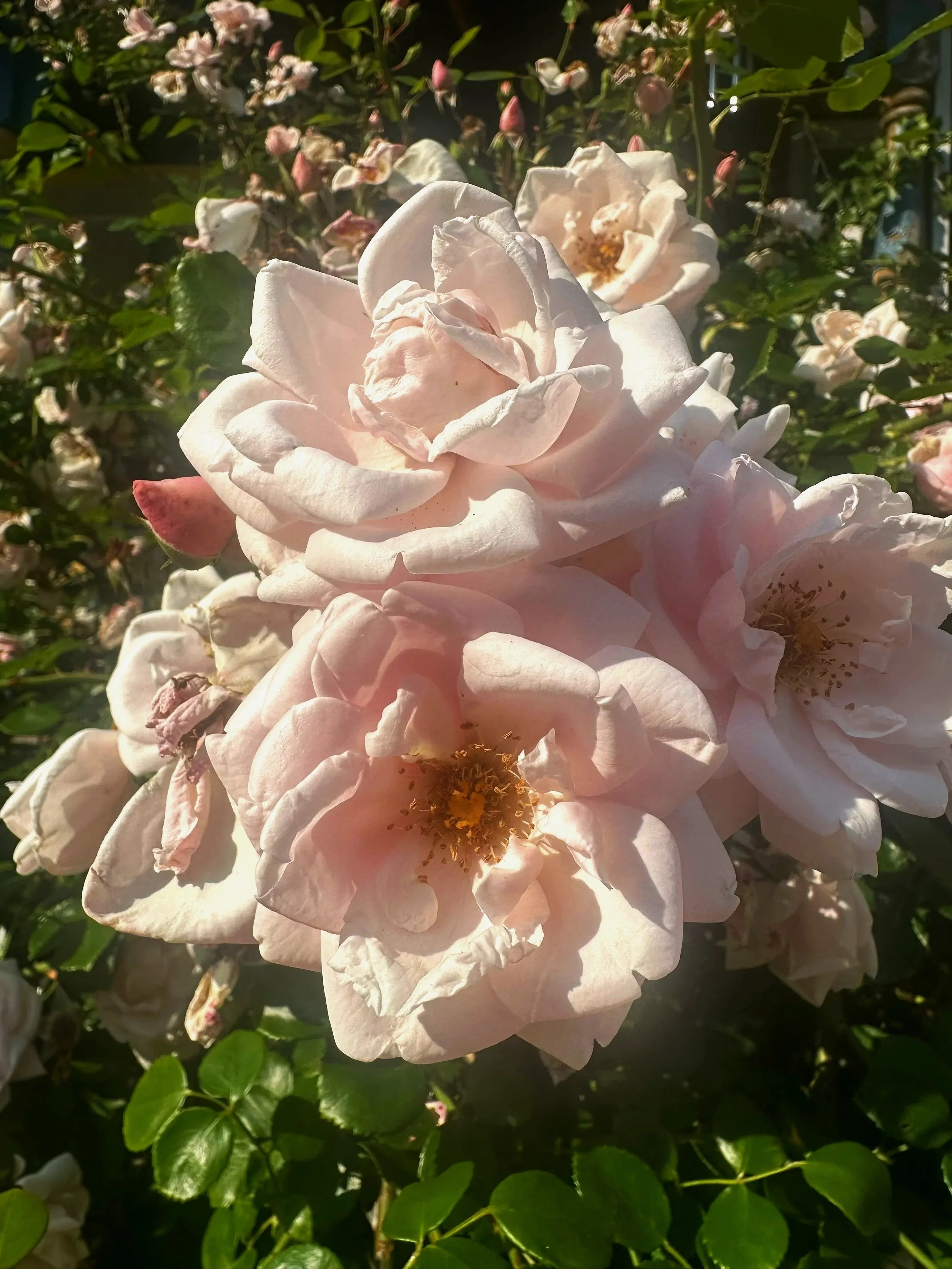
A rose, is a rose, is a rose, and by any other name would still smell as sweet. These are just two examples of how roses have been entrancing artists for centuries. As we are just beginning librarians season I have been hearing rose gently calling, whispering work with me. It began about a week ago and then as I realized librarians season was fast approaching I thought ahhh libra ruled by Venus same as rose. The sign of beauty, of relationship, of justice even. Venus is so much more than surface beauty she is the senses and values. And while rose is obviously Venusian she goes much deeper as well. So I wanted to invite you to work with rose this season to sit with her daily as a cup of tea, maybe keep fresh cut roses in vase, invite her in and see what she has to share! We have always had a lovely affair with roses she’s beautiful but she’s also a reminder of strong boundaries (hello thorns) she tells us love softly and strongly but if someone’s a prick they get pricked! Remember “ every rose has its thorn” see inspiring artists always. So be it petal adorned aisles, beds, bathtubs or perfumes or gifted as an expression of love roses have been here throughout history and while they’ve gone a long way from their simple five petals they have and always will carry their own beauty, intoxicating scent, magic, and healing.
My invitation you, stop and smell the roses…or make a cup of rose tea while you learn all about her medicine below.
Materia Medica Study
Rosa canina L.
I. Plant Name
Official Botanical: Rosa canina
Official Common: Dog Rose
Other: Dog brier, Brier rose, rose hips
Related species: Rosa alba, Rosa centifolia, Rosa chinensis, Rosa
damascena, Rosa davurica, Rosa gallica, Rosa indica, Rosa levigata, Rosa multiflora, Rosa
rugosa.
Parts used:
Fruit (commonly referred to as rose hips, or “hips”), petals, roots
Name derivative and translation: Rosa canina translating literally to dog (canine) rose (rosa) finds its roots in ancient Greece. Rose is derived from the Greek word rodon meaning red. The roses native to this area were commonly deep crimson. They were believed to have sprung from the blood of the Adonis. Hippocrates and Roman naturalist Pliny believed the root of the dog rose was a cure for a bite from a rabid dog. Thus, it was named Rosa canina. Another common thought is that it was actually called the dag rose, because the thorns were sharp like daggers however was misheard as dog rose. The scarlet fruit or hip gets its name from the Anglo-Saxon word hiope.
II. Botanical Description
Rosa canina is an herbaceous deciduous shrub, they are beautiful climbing perennial growing up to 18ft in height. R. canina blooms may be solitary or grouped containing five petals and varying in shades which range from white to a soft pink, some flowers have a white center that ombre’s out to a soft pale pink. The sepals are a brighter green whereas the leaves are a medium green. They bear brilliant vermillion fruit that is oval in shape. The stem has sharp downward curved thorns or prickles. The leaves grow in 5-7 leaflets, ovate to elliptic, toothed and form an odd pinnate.They are smooth and the leaf margin is serrate. R. canina blossoms have a sweet light floral scent. The fruit is actually hiding inside the “flask shaped” casing which resembles a berry. The real fruit contain one seed each and are small and hairy. The hips are tough in early summer and you can distinguish them by the crown of five cleft calyx leaves. In autumn when it is time to harvest they fall from the bush and are softer and fleshy. The pulp of the hips are very acidic.
III. Taxonomy
Queendom: Plantae
Division: Tracheophyta
Class: Magnoliopsida
Order: Rosales
Family: Rosaceae
Genus: Rosa
Species: Rosa canina
IV. Plant Herstory
Native to Europe, North Africa, temperate areas of Asia. Roses can now be found growing in both hemispheres wherever there is temperate climate. Cultivation has brought roses to the Antipodes, South Africa, and South America as well. It is believed that the rose began its life somewhere near the Persian Gulf. Spreading across Mesopotamia, Palestine, Asia Minor and slowly making way to Greece. From Greece the rose made its ways to Southern Italy. It also has a heavy prevalence in German folklore. It is said to be brought to North America by early settlers. It is the most common wild rose in Britain.
V. Ethnobotany
In ancient greek and roman times the roots of the dog rose were used to cure someonewho was bite by a rabid dog. It is written that a mother’s son had been bitten by a rabid dog, it is said she had a dream in which she was led to the root of the rose and told to make a decoction to heal her son. He was cured of his ailment. It was also used in ancient Greece as medicine for colds and sore throats. The Romans also wore rose garlands at large feasts to prevent drunkenness. Rose hips were used during the middle ages as a sweetmeat. While the dogwood rose was not as prominently used as other Rosa spp. it was known and valued as a folk remedy for chest problems. When garden fruits were scarce rose hips where used as a dessert. Germans used the fruit to make preserves while Russians and Swedes fermented the fruit to make wine. During WWII the fruit was used by english commanders for the high quantity of Vitamin C ( since citrus could not be imported) and given to soldiers in an attempt to keep them healthy, and the public when they were experiencing deficiencies.
VI. Cultivation and Propagation
Typically grows in temperate climates, in hedgerows, thickets, woodland edges and clearings. They are heavy drinkers but can be grown in low desert climates which are similar to the mediterranean conditions they began in. Water them deeply but infrequently for proper root growth. They self pollinate once the casing to the fruit is opened, usually by birds who then consume the seeds, they later pass the seeds which will give birth to new plants. R. canina can tolerate a variety of conditions. but really thrive in a clearing where they can receive full sun.
Rosa spp. also prefer moderately fertile soil that is well draining, and rich in humus. If planting it should be done in late spring or early fall. The flowers will bloom mid summer and hips will be ready for harvest in mid autumn. Once the flower blooms a softwood cutting can be take for propagation. Hardwood cuttings should be taken in fall. The buds can be collected in early summer, and seeds should be sown in fall.
VII. Wild Crafting and Domesticated Harvest
Roses are not at risk and can be harvested freely while on a hike or walk along the edge of the woods. R. canina is an early summer bloomer, blooming from early June until about mid July. Fruit is harvested in autumn. The flowers are usually gathered as buds and dried in early summer. The petals are also used and can be collected after the blossom opens but before the air gets cold. You want to harvest the flowers before the energy returns to the roots. The roots would be harvested mid-late fall.
VIII. Preparation Methods
Hips are best fresh but can be used dried.
Internal:
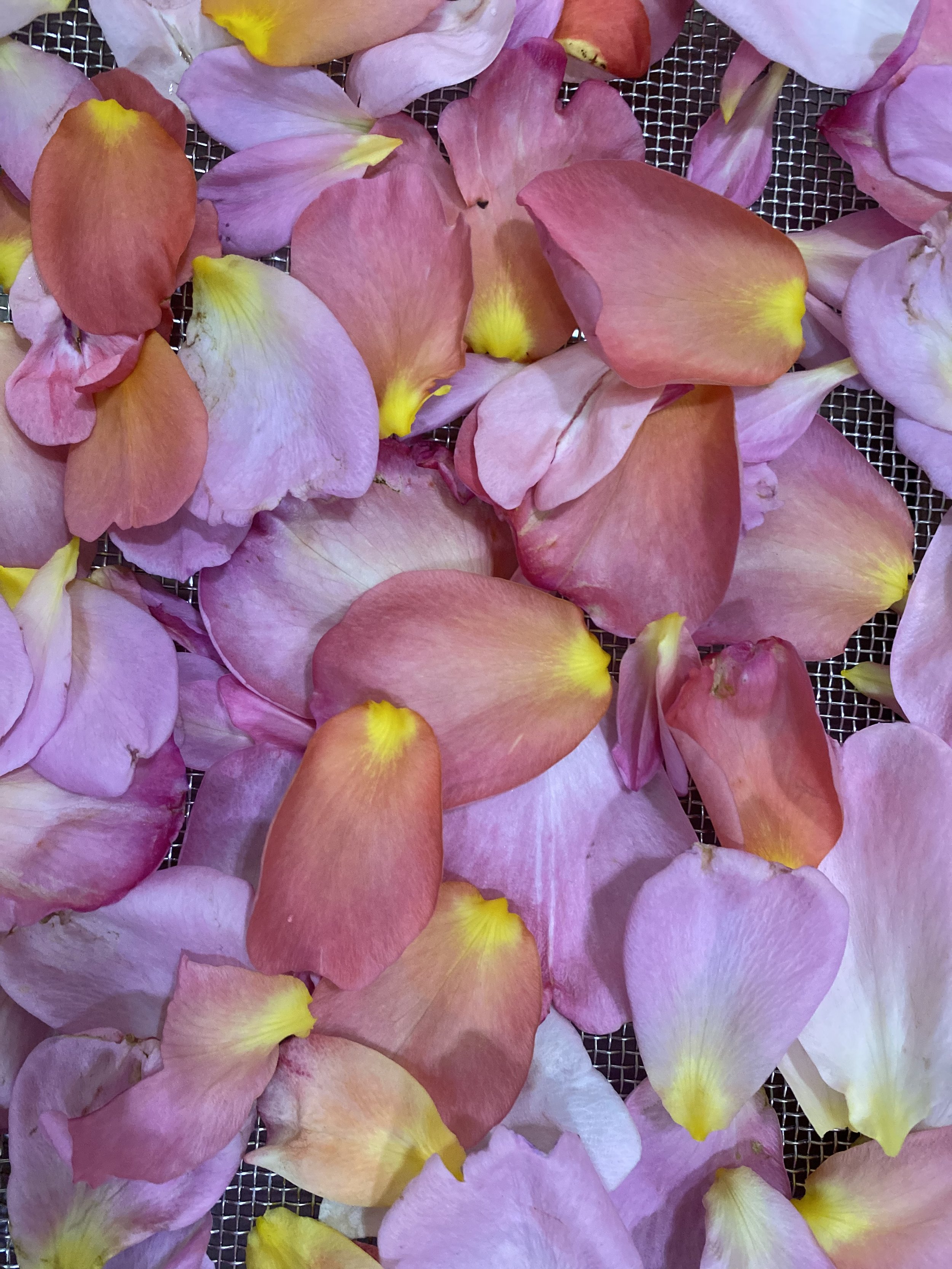
Syrups, flower essence, tea, rose glycerates, extracts/ tinctures, jam. Rose hips are used for wine. The petals of the rose are often used in Turkish, Arab, and Indian dishes. They also make a wonderful topping for salad with their sweet floral and slightly bitter taste.
External:
Aromatic water, rose infused-oil, bath, lotion, wound poultice. Dried roses have a lovely scent and are often added to sachets and potpourri.
IX. Pharmacognosy
Ascorbic acid, Alpha-tocopherol, Carotenoids, Catechins, Citric Acid, Citrates, Flavonoids, Leucoanthocyanins, Pectin, Polyphenol, 5-6 Epoxulutein, Vitamin C, Vitamins A, B1, B2, B3, and K , Tannins, Malic Acid, Malates, Resin, Sugar, Volatile oil, and Vanillin.
X. Properties and Actions
A. Anti-Inflammatory
B. Astringent
C. Mild Laxative
D. Expectorant
E. Anti-septic
F. Tonic
G. Emotional Support/ Heart Healing
H. Mild Diuretic
XI. Indications
A. Helpful for varying arthritic conditions including rheumatoid arthritis, and lower back pain.
B. Soothes and tones skin. Helpful for burns, mouth ulcers, chapped hands, sore eyes, any irritated skin. Contracts pores. Astringent properties are also helpful for oily hair and skin.
C. Helps to ease constipation by toning the stomach
D. Helpful for coughs and infections
E. Improves resistance to infection
F. Strengthens and tones the stomach making it useful for diarrhea and dysentery.
G. When taken as a flower essence to provide emotional support rose is wonderful for
heart healing and opening. Deeply connected to the heart chakra love, and relationships.
H. Increases flow of urine, can help with stones and overall beneficial to kidneys.
XII. Administration and Dosage Strategies
2-4g/day, or max 30g (1oz/ week) A mild herb that can be taken for extended periods of time
without being harmful.
Following dosage above:
Jam can be eaten daily for a boost in Vitamin C.
Dried rose hip tea ( best when crushed and macerated) to relieve cold symptoms and exhaustion cover the tea while brewing to keep the aromatics in the cup.
Leaf tea can be used as a mild laxative or as applied to wounds as a poultice.
Syrup can be give to children to prevent infection and ease cough.
Rosewater can be applied to the skin for burns, mouth ulcers, chapped hands, and sore eyes, it soothes and tones the skin as dose rose infused oil. Taking a warm bath with rose infused oil or petals to nourish, cleanse and tone skin. A rose lotion can be used as after shave, to moisturize and tone skin, and as deodorant.
XIII. Side Effects
Clinical trials have shown the fruit of the rose “rose hips” to be primarily safe/ “well-tolerated” with no significant side effects. Allergic reactions may occur in some individuals. The fruit both fresh and dried contains smalls hairs which may cause irritation to the mouth, throat, and other areas. Hairs are removed in commercial processing. In rare unlikely occasions the fruit or syrup may cause gastrointestinal upset.
XIV. Contra-Indications
None Known - While there are seemingly no concerns for those pregnant or lactating significant research has not been completed for these groups, therefore use with caution.
XV. Toxicity and Regulatory Status
Safety Class 1 Interaction Class A - Therefore the herb can be safely consumed when used appropriately, and no clinically relevant interactions are expected.
XVI. Personal Commentary
Roses became referred to as “queen of the flowers” thanks for Greek Poet Sappho ( in 600 BC), due to their remarkable beauty and delicate fragrance. Roses have been a regal symbol and muse throughout history of love, passion, beauty, pleasure and elegance. The roses' sweet floral scent has allured and attracted many, causing them to adorn their bodies with the perfume. Their majestic splendor enchanting and captivating many artists. The Rubus and Prunus genus are also in the Rosaceae family. These include raspberries, blackberries, and most stone fruit such as plums and cherries. Germans considered rose hips to be a sign of the devil and believed fairies used them to make themselves invisible. The oldest living dog rose known as the Rose of Hildesheim climbs on the walls of German cathedral. It is 700 years and reaches over 30ft in height! During the Roman Empire times the blossoms were used as decortication and strewn along the ground. For marriage ceremonies the couple was crowned with roses. It was also custom to hang a rose over the dinner table as sign to those dining that anything shared here would be kept secret and sacred hence the term “sub rosa”. The plaster ornaments in the center of the ceiling are commonly referred to a roses because of this tradition. It takes approximately 30 roses for 1 drop of oil, a reminder that we should use roses like all plants with a sacred passion, understanding, and gratitude.
Resources
“ROSACEAE - The Rose Family.” Rosaceae, The Seed Site, http://www.theseedsite.co.uk/
rosaceae.html.
G, Chuck. “Dictionary of Botanical Epithets.” Dictionary of Botanical Epithets, North American
Rock Garden Society, 30 Dec. 2005, http://botanicalepithets.net/dictionary/
dictionary.158.html.
“Rosaceae.”Dictionary of Botany, 2002, http://www.botanydictionary.org/rosaceae.html.
Hobbs, Christopher, et al.American Herbal Products Association's Botanical Safety Handbook.
1st ed., American Herbal Products Association, CRC Press, 1997.
McGuffin, Michael, et al. Herbs of Commerce. 2nd ed., American Herbal Products Association,
2000.
Gardner, Zoe, and Michael McGuffin. American Herbal Products Association’s BOTANICAL
SAFETY HANDBOOK, Second Edition. CRC Press, 2013 by Taylor & Francis Group, LLC.
Pages: xxi-xxiii
Chevallier, Andrew. Encyclopedia of Herbal Medicine. DK Publishing, 2016.
June - Rose. FineGardening, 1 June 2008, https://www.finegardening.com/article/june-rose.
Roses.Modern Herbal | Roses, http://botanical.com/botanical/mgmh/r/roses-18.html.
Young , Rachel. “Water-Wise Rose Care.”FineGardening, 29 Apr. 2021, https://
www.finegardening.com/article/waterwise-rose-care-in-southern-california.
Rosa. FineGardening, 24 Jan. 2018, https://www.finegardening.com/genus/rosa.
Woodland Trust. Dog Rose.Woodland Trust, https://www.woodlandtrust.org.uk/trees-woods-and-
wildlife/plants/wild-flowers/dog-rose/.
Gardening Answers Knowledgebase. Elisabeth C Miller Library, https://depts.washington.edu/
hortlib/resources/wp-resource_search.php?term=2793.Â
Chevallier, Andrew, and David Keifer. Herbal Remedies. Metro Books, 2016.Taxonomy Browser (Rosa Canina). National Center for Biotechnology Information, U.S.
National Library of Medicine, https://www.ncbi.nlm.nih.gov/Taxonomy/Browser/
wwwtax.cgi?mode=Info&id=74635.
Rosa SPP (Rosaceae) Pdf. Dr. Duke's Phytochemical and Ethnobotanical Databases at NAL,
https://phytochem.nal.usda.gov/phytochem/plants/show/1717?
qlookup=rosa%2Bspp.&offset=0&max=20&et=#act-46221-close.
The Thousand Year Rose.German Culture, https://germanculture.com.ua/travel-to-germany/
thousand-year-rose-of-hildesheim/.
Dog Rose - Health Benefits and Therapeutic Properties. Nature and Garden, 24 Apr. 2020,
https://www.nature-and-garden.com/health/dog-rose-health-benefits.html.
What Is a Dog Rose - Where Do Dog Roses Grow. https://www.gardeningknowhow.com/
ornamental/flowers/roses/dog-rose-information.htm.
Encyclopedia, WEMP. Dog Rose - WEMPlapedia, the Wild Edible and Medicinal Plant
Encyclopedia.Dog Rose - WEMPlapedia, the Wild Edible and Medicinal Plant
Encyclopedia, 3 Nov. 2013, https://www.wempla.com/encyclopedia/en/plant/rosa-canina.
Rose, Jeanne. The Herbal Body Book. Grosset & Dunlap, 1976.
Bremness, Lesley. Herbs the Visual Guide to More than 700 Herb Species from around the
World. Dorling Kindersley, 1994.
Bunney, Sarah, et al. The Illustrated Encyclopedia of Herbs: Their Medicinal and Culinary Uses. Dorset Press, 1984. Â.